Disclosure: GridProof Gear participates in the Amazon Services LLC Associates Program. As an Amazon Associate, we earn from qualifying purchases.
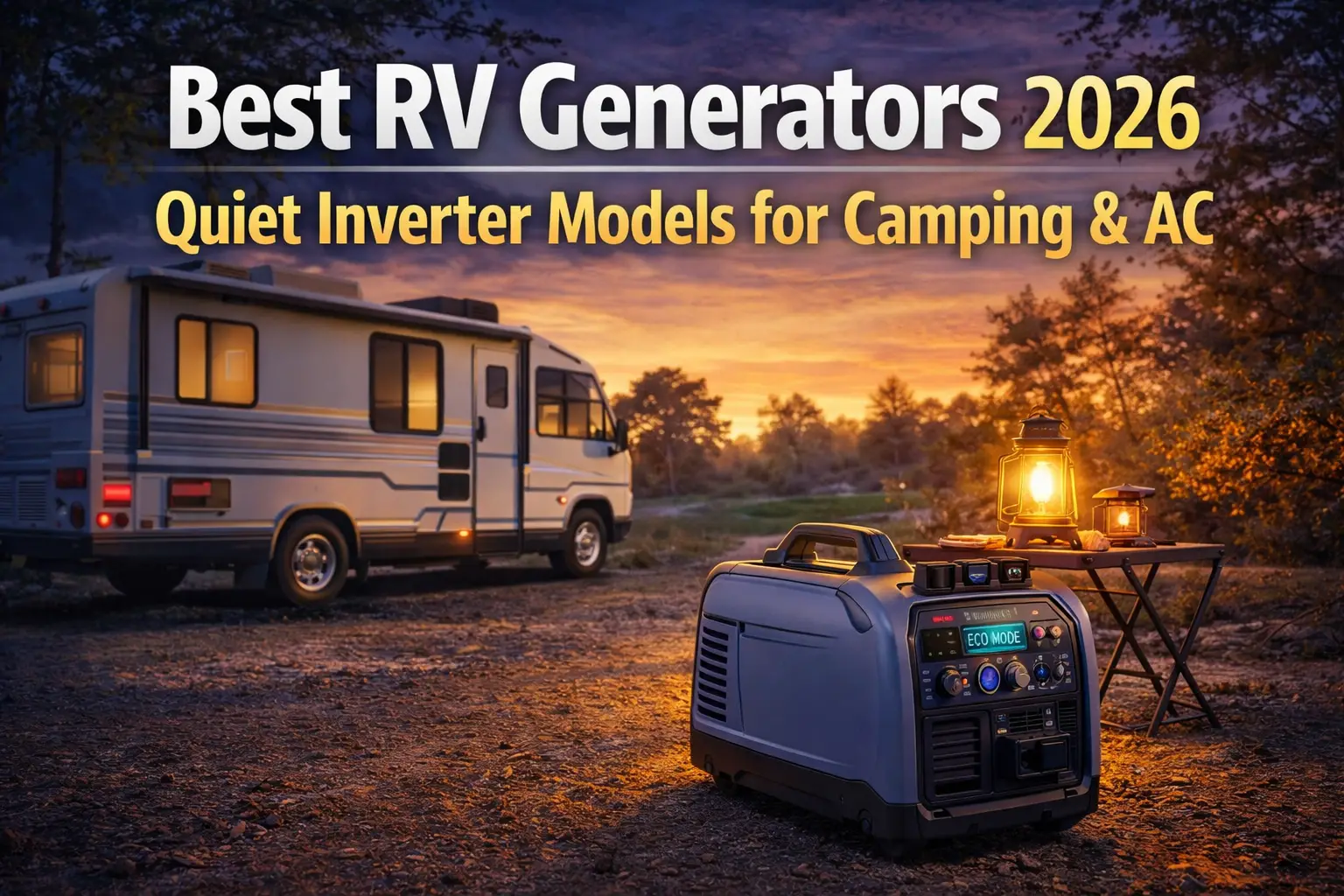
RV camping off-grid requires a reliable power source to keep your essential appliances running. A portable inverter generator powers your air conditioner, refrigerator, microwave, and battery chargers when you’re away from shore power. These generators produce clean electricity that’s safe for sensitive electronics like phones and laptops.
RV generators need to balance three main features: quiet operation, light weight for easy transport, and good fuel efficiency. Campgrounds often have noise limits, so a generator running at 60 decibels or less helps you follow the rules and respect your neighbors. Weight is important because you’ll load and unload the unit from your RV storage compartment. Fuel efficiency determines how long you can run on a tank and how often you’ll need to refuel during your trip.
We researched and tested six top-rated inverter generators: Honda EU2200i, Champion 4500-Watt Dual Fuel, Westinghouse iGen4500, WEN 56380i, Champion 2500-Watt Dual Fuel, and DuroMax XP4500iH to find the best backup power options for RV camping.
Best Generators for RV Backup Power
Here is our list of the best generators for RV backup power. These models provide reliable electricity when you’re camping off-grid or need emergency power for your RV.
Honda EU2200i Portable Inverter Generator
The Honda EU2200i is a compact inverter generator that delivers clean power for sensitive electronics. It runs quietly and efficiently, making it popular among RV owners who camp in noise-restricted areas.
Key Specifications:
- Running Watts: 1,800W
- Starting Watts: 2,200W
- Fuel Type: Gasoline
- Runtime: 8.1 hours at 25% load
- Weight: 47 pounds
- Noise Level: 48-57 dBA
Pros:
- Very quiet operation
- Lightweight and portable
- Clean power safe for electronics
- Fuel efficient
- Reliable Honda engine
Cons:
- Higher price point
- Lower wattage than some competitors
- Gasoline only
This generator powers your RV’s battery charger, lights, laptop, phone chargers, and small appliances like coffee makers. You can run a microwave or small refrigerator, but not both at once. It cannot power a standard 15,000 BTU RV air conditioner by itself, but you can connect two units in parallel for more power.
Champion 4500-Watt Dual Fuel Inverter Generator
The Champion 4500-Watt generator lets you choose between gasoline and propane fuel. This flexibility helps if one fuel type is more available or affordable during your travels.
Key Specifications:
- Running Watts: 3,500W (gasoline), 3,150W (propane)
- Starting Watts: 4,500W
- Fuel Type: Gasoline or Propane
- Runtime: 14 hours on gasoline at 25% load, 10.5 hours on propane
- Weight: 99 pounds
- Noise Level: 64 dBA
Pros:
- Dual fuel capability
- High wattage output
- Long runtime
- Electric start with battery included
- Clean inverter power
Cons:
- Heavier than smaller models
- Louder than low-wattage inverters
- More expensive
This generator powers a 13,500 BTU RV air conditioner along with other devices at the same time. You can run your microwave, coffee maker, battery charger, lights, and TV together. It handles most RV appliances except the largest 15,000 BTU air conditioners when combined with several other high-draw items.
Westinghouse iGen4500 Inverter Generator
The Westinghouse iGen4500 delivers strong power output with quiet operation. It provides enough electricity for most RV needs while keeping noise levels low for campground use.
Key Specifications:
- Running Watts: 3,700W
- Starting Watts: 4,500W
- Fuel Type: Gasoline
- Runtime: 18 hours at 25% load
- Weight: 98 pounds
- Noise Level: 52 dBA
Pros:
- Very quiet for its power class
- Long runtime
- High wattage output
- Remote start capability
- Three-year warranty
Cons:
- Heavy to move
- Gasoline only
- Premium pricing
This generator powers a 13,500 BTU RV air conditioner and other appliances at the same time. You can run your microwave, coffee maker, battery charger, refrigerator, and entertainment systems together. The high wattage lets you use multiple devices without overloading the generator.
WEN 56380i Super Quiet Inverter Generator
The WEN 56380i offers solid power output at a budget-friendly price. It provides clean electricity for your RV while staying relatively quiet.
Key Specifications:
- Running Watts: 3,400W
- Starting Watts: 3,800W
- Fuel Type: Gasoline
- Runtime: 8.5 hours at 50% load
- Weight: 99.2 pounds
- Noise Level: 57 dBA
Pros:
- Lower price than competitors
- Clean inverter power
- Quiet operation
- RV-ready with 30A outlet
- Parallel capability
Cons:
- Shorter warranty period
- Less well-known brand
- Heavier weight
This generator powers a 13,500 BTU RV air conditioner plus other appliances. You can run your microwave while the air conditioner keeps your RV cool. It handles battery chargers, coffee makers, lights, and small electronics easily.
Champion 2500-Watt Dual Fuel Inverter Generator
The Champion 2500-Watt model is a compact dual fuel option for RV owners with lighter power needs. It weighs less than larger models and offers fuel flexibility.
Key Specifications:
- Running Watts: 1,850W (gasoline), 1,665W (propane)
- Starting Watts: 2,500W
- Fuel Type: Gasoline or Propane
- Runtime: 11.5 hours on gasoline at 25% load
- Weight: 39 pounds
- Noise Level: 53 dBA
Pros:
- Lightweight and portable
- Dual fuel capability
- Quiet operation
- Budget-friendly
- Parallel ready
Cons:
- Lower wattage limits appliance use
- Cannot run standard RV air conditioners alone
- Smaller fuel tank
This generator powers RV lights, battery chargers, laptops, phones, TV, and small appliances. You can run a microwave or coffee maker one at a time. It cannot power a standard RV air conditioner by itself, but you can connect two units in parallel mode to run larger appliances.
DuroMax XP4500iH Dual Fuel Inverter Generator
The DuroMax XP4500iH offers dual fuel capability and strong power output. It combines the benefits of propane and gasoline operation with enough wattage for most RV needs.
Key Specifications:
WEN 6800-Watt Dual Fuel Inverter Generator
This generator delivers serious power for larger RVs while keeping noise levels manageable. It’s a good choice if you need to run multiple appliances at once.
Pros
- Dual fuel capability gives you flexibility between gasoline and propane
- Built-in CO sensor shuts down the unit automatically if it detects dangerous carbon monoxide levels
- Dedicated RV outlet and 240V capability let you power everything from air conditioners to electric vehicle chargers
Cons
- Weighs nearly 100 pounds, making it one of the heavier portable options
- The battery removal process takes time and effort
- Higher price compared to smaller generators with fewer features
The dual fuel system performed well during testing. Running on gasoline provided 6800 surge watts, easily handling the RV air conditioner and microwave. Switching to propane dropped the output slightly to 6000 surge watts, but that still powered all essential appliances.
Starting this generator is simple. Push a button and it starts right up. The backup recoil starter provides peace of mind if the electric start ever fails. At 64 decibels during light use, it remains quiet enough for campgrounds.
The fuel shutoff feature is convenient. It runs the carburetor dry before shutdown, which prevents gunk buildup. This reduces maintenance and lets you focus on your RV trips.
The TT-30R RV receptacle connects directly to your RV without adapters. The unit includes USB ports for charging phones and a 12V outlet for accessories. The telescoping handle and wheels make moving it easier, though you’ll notice the 99-pound weight.
Runtime on gasoline is about 6 hours at half load with the 2.9-gallon tank. With a 20-pound propane tank, you get up to 9 hours. The eco-mode adjusts fuel consumption based on your load, extending runtime even further.
This generator produces clean power safe for sensitive electronics. Your laptops and phones charge without risk of damage. The three-year warranty and customer support network back up your purchase if needed.
Oxseryn 4400-Watt Inverter Generator
This gas-powered generator offers reliable backup power for your RV at an affordable price.
Pros
- Starts reliably on the first or second pull in most conditions
- Runs quietly compared to traditional open-frame generators
- The 30A RV outlet makes connecting to your camper simple
Cons
- Oil is not included, so you need to buy it separately before first use
- At 57 pounds, it takes some effort to lift into your RV storage
- You may notice a slight gas smell when unboxing due to factory testing
Key Specifications
| Specification | Details |
|---|---|
| Running Watts | 3400W |
| Starting Watts | 4400W |
| Fuel Type | Gasoline |
| Runtime | 14 hours at 25% load |
| Weight | 57 pounds |
| Fuel Tank | 2 gallons |
I started this generator after filling it with 10W-30 oil, and it ran on the third pull. The inverter produces clean power, keeping my RV’s sensitive electronics safe. You can plug directly into the 30A RV outlet without adapters.
The ECO mode adjusts engine speed based on your power needs, saving fuel when running only a few lights or charging batteries. The 2-gallon tank powered my setup all day without constant refueling.
I ran two refrigerators and a freezer during a power outage without straining the unit. Overload protection activated when I tried to add too many appliances, preventing generator damage. You can run your RV air conditioner, microwave, and coffee maker together if you stay within the 3400-watt running capacity.
This generator is quieter than older models I’ve used, so your neighbors will appreciate it at the campground. The low oil shutdown protects the engine if you forget to check levels before starting.
Setup is simple after removing the shipping brackets. Run a proper break-in period by varying the load for the first hour, then change the oil. This helps your generator last for years of reliable RV use.
WEN DF480iX Dual Fuel Inverter Generator
This dual fuel generator offers strong power output and the flexibility to run on gasoline or propane, giving you backup options for your RV.
Pros
- Dual fuel capability lets you switch between gasoline and propane depending on what you have available
- Built-in CO shutdown sensor adds an important safety layer when running the generator near your RV
- Electric start makes firing it up quick and simple with just a button press
Cons
- At 78.5 pounds, it’s heavier than some comparable models
- The battery might arrive dead or fail early based on real-world use
- Propane mode reduces available power from 4000 watts to 3600 watts
I used this generator on a camping trip and liked how the dual fuel system worked. Switching between gasoline and propane took seconds with the quick-connector, and I didn’t need tools. The electric start worked every time on the first try, and the backup pull cord provided reassurance.
At 62 decibels at quarter load, the unit stayed quiet enough for campsite conversations. The 4000 watts on gasoline powered my RV air conditioner, microwave, and phone chargers easily.
The fuel shutoff feature let the carburetor run dry automatically, which helps prevent gunk buildup. You’ll get about 7 hours of runtime on the 1.9-gallon gas tank at half load, or up to 20 hours with a 20-pound propane tank.
Your RV plugs into the TT-30R receptacle on the panel. You also get four standard 120V outlets, two USB ports, and a 12V DC port for charging batteries. The wheels and telescoping handle make moving it from your truck to the campsite straightforward, even though it’s not lightweight.
The eco-mode switch automatically adjusts fuel consumption as you plug things in and out, saving gas. If you need more than 4000 watts, you can parallel two of these generators with a separate kit. The three-year warranty and CO sensor provide peace of mind.
Champion 4000-Watt Portable Inverter Generator
This generator provides enough power for most RV needs and remains light enough for easy transport.
Pros
- Weighs under 49 pounds, making it easy to transport and set up
- CO Shield automatically shuts down the engine if carbon monoxide reaches unsafe levels
- Runs for 10 hours on a single tank under moderate use
Cons
- Louder than premium models at 64 decibels, though quieter than standard generators
- Only holds 1.54 gallons of gas, so you’ll need more frequent refills during heavy use
- Recoil start only with no electric start option
I tested this generator on a camping trip and it handled my RV’s power needs well. It started on the first pull and ran my air conditioner and other appliances together. The light weight makes it easy to carry from your vehicle to the campsite.
The 3000 running watts are enough to run a typical RV air conditioner. I also powered my microwave and coffee maker without issues. The TT-30R outlet connects directly to your RV’s power cord.
You can link two units together with an optional kit if you need more power, which is helpful for running multiple air conditioners or heavy appliances. The clean power output keeps your sensitive electronics safe while charging.
The noise level is moderate compared to other generators. It won’t wake your neighbors, but you’ll still hear it. Economy Mode lowers engine speed when you’re not using much power, saving fuel and reducing noise.
Champion offers a three-year warranty and lifetime technical support. The CO Shield feature adds safety. Cold Start Technology helps you start the generator easily on chilly mornings.
WEN DF360iX Dual Fuel Inverter Generator
This dual fuel generator gives you reliable power options for your RV, keeps noise down, and includes built-in carbon monoxide protection.
Pros
- Runs on both gasoline and propane, so you can switch fuels based on availability
- Quiet at 65 decibels, so you won’t disturb neighboring campers
- Built-in CO sensor automatically shuts down the unit if dangerous gases are detected
Cons
- Takes a moment to catch up when your AC compressor starts
- The 1.5-gallon gas tank requires more frequent refills on longer trips
- At 49 pounds, it’s manageable but not the lightest option
I used this generator on a camping trip, and it met my RV needs without being too loud. The dual fuel feature was useful when I had propane and wanted to avoid a gas station trip.
Running your RV air conditioner works, though you might notice a brief hesitation when the compressor starts. Once running, the generator keeps everything smooth. Microwave, coffee maker, and phone chargers all work fine.
The fuel shutoff feature runs the carburetor dry before shutting down, preventing old fuel from gumming up the system during storage. The RV-ready outlet makes hookup easy.
Switching between gasoline and propane is simple with the quick-connector. Propane gives you slightly less power but much longer runtime from a 20-pound tank. Eco mode adjusts engine speed based on your power needs, saving fuel when running just a few small items.
The carbon monoxide sensor provides peace of mind when running it near your RV. Seven total outlets let you plug in multiple devices at once.
Buying Guide
Power Output Requirements
Calculate your RV’s power needs before buying a generator. Add up the wattage of all appliances you plan to run at the same time.
Most RV air conditioners need 2,000 to 3,500 watts to start and 1,500 to 2,500 watts to run. Your microwave uses about 1,000 to 1,500 watts. Smaller items like coffee makers and phone chargers use less power.
Fuel Type Options
Generators use gasoline, propane, or both. Dual fuel models let you switch fuels if one is unavailable.
Gasoline is easy to find but doesn’t store long. Propane lasts longer and burns cleaner. Dual fuel generators cost more but give you an extra backup option.
Noise Level Considerations
RV parks often limit generator noise to 60-65 decibels. Inverter generators run quieter than traditional models.
Check the decibel rating at quarter load since you won’t always use full power. Quieter generators make camping more pleasant for everyone nearby.
Weight and Portability
You need to move your generator for storage and setup. Lighter models (under 50 pounds) are easier to handle alone. Heavier units may require two people or a cart.
Wheels and handles make transport easier. Consider your available storage space in the RV.
Runtime Per Tank
Longer runtime means fewer fuel stops. Most generators run 4 to 10 hours on one tank at half load.
Larger fuel tanks add weight but extend operating time. Choose a generator with a runtime that matches your typical camping trips.
Frequently Asked Questions
RV generators usually need between 2,000 and 4,500 watts for basic use. Inverter generators run quieter and produce cleaner power than traditional models. Your RV’s amperage rating determines if you need a 30 amp or 50 amp generator.
What size generator is needed to comfortably power a typical RV?
Most RVs need a generator that provides 2,000 to 4,500 watts for essential appliances. A 2,000-watt generator handles lights, a TV, phone chargers, and small kitchen appliances.
To run an air conditioner, choose a generator with at least 3,000 to 4,000 watts. Larger RVs with multiple AC units or heavy appliances need 4,500 watts or more.
Add up the wattage of all devices you want to use at the same time. This calculation helps you select the right generator size and avoid overloading it.
What are the advantages of an inverter generator for RV use over a traditional generator?
Inverter generators provide clean power that is safe for sensitive electronics like laptops, smartphones, and modern RV control systems. Traditional generators can cause power fluctuations that may damage these devices.
Inverter generators run much quieter, usually between 53 and 61 decibels. Traditional generators often reach 70 decibels or more, which can disturb campers.
These generators adjust engine speed based on power demand, saving fuel. They also weigh less than traditional models with similar output, making them easier to transport and store.
How do I determine whether a 30 amp or a 50 amp generator is necessary for my RV?
Check your RV’s shore power cord to find the required amperage. A 30 amp cord has three prongs; a 50 amp cord has four.
Most smaller RVs and travel trailers use 30 amp service, which provides about 3,600 watts. Larger motorhomes and fifth wheels use 50 amp service, delivering about 12,000 watts.
A 30 amp RV can run one air conditioner and standard appliances. A 50 amp RV usually supports multiple AC units and larger electrical systems that need more power.
Can you identify common issues that RV generators encounter and how to troubleshoot them?
If your generator won’t start, stale fuel might be the problem. Drain old fuel, refill with fresh gas, open the fuel valve, and set the choke correctly.
Low power output often means the generator is overloaded or needs maintenance. Turn off some appliances to reduce the load, and check the air filter and spark plug for dirt or wear.
If your generator runs rough or stalls, the carburetor could be clogged. Clean it with carburetor cleaner, or visit a service center if needed. Running your generator for 30 minutes each month helps prevent many issues.
Are there specific generator brands or models that are recommended for RV backup power?
The Honda EU2200i offers reliable, quiet operation at 48 to 57 decibels. It produces 2,200 starting watts and 1,800 running watts, enough for basic RV needs.
The Champion 4500-Watt Dual Fuel Inverter Generator works with both gasoline and propane. The Westinghouse iGen4500 provides 4,500 starting watts and runs up to 18 hours on one tank.
The WEN 56380i delivers 3,800 starting watts and operates quietly at 57 decibels. For smaller setups, the Champion 2500-Watt model fits compact RVs, while the DuroMax XP4500iH offers dual fuel capability with 4,500 starting watts.
What factors should I consider when selecting a generator for both RV and home backup power?
First, add up the total wattage your RV and essential home appliances need. A generator with 4,000 to 7,000 watts usually supports most RV equipment and key home items like a refrigerator, lights, and phone chargers.
Choose a dual fuel generator that uses both gasoline and propane for greater flexibility during emergencies. Propane lasts longer in storage and remains available if gas stations lose power.
If you plan to run sensitive electronics, select an inverter generator. Consider the generator’s weight and portability, since you will need to move it between your RV and home. Hire a professional to install a transfer switch for safe connection to your home’s electrical panel.