Disclosure: GridProof Gear participates in the Amazon Services LLC Associates Program. As an Amazon Associate, we earn from qualifying purchases.
Generators keep your home running during outages—but rain, snow, and severe weather can quickly destroy an unprotected generator when you need it most.
Water exposure can ruin electrical components, create dangerous shock hazards, and shorten the life of your generator. During storms, many homeowners also make the mistake of using unsafe tarps or makeshift covers that block ventilation and create serious carbon monoxide risks.
The right generator cover protects your investment, prevents expensive weather damage, and helps keep your backup power system ready when you need it most.
In this guide, we’ll cover the best generator covers for rain and snow, including running covers you can safely use during storms and storage covers designed for long-term outdoor protection.
A quality generator cover is one of the cheapest ways to prevent expensive generator repairs and extend the life of your backup power system.
Can You Run a Generator in Rain or Snow? (Quick Answer)
Never run a generator fully exposed in heavy rain or snow.
Water can damage electrical components, create dangerous shock hazards, and lead to expensive repairs. Even light rain can cause problems if moisture reaches outlets or internal electronics.
The safest solution is using a generator running cover or generator tent specifically designed for wet-weather operation.
These covers:
- Protect against rain and snow
- Maintain critical ventilation
- Prevent overheating
- Allow exhaust fumes to escape safely
Never use regular tarps or enclosed covers while a generator is running. Blocking airflow can create fire hazards and dangerous carbon monoxide buildup.
We evaluated generator covers based on weather resistance, ventilation safety, durability, ease of setup, and compatibility with popular portable generators.
Best Generator Covers for Rain & Snow (Top Picks for 2026)
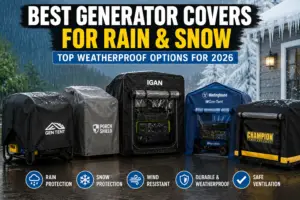
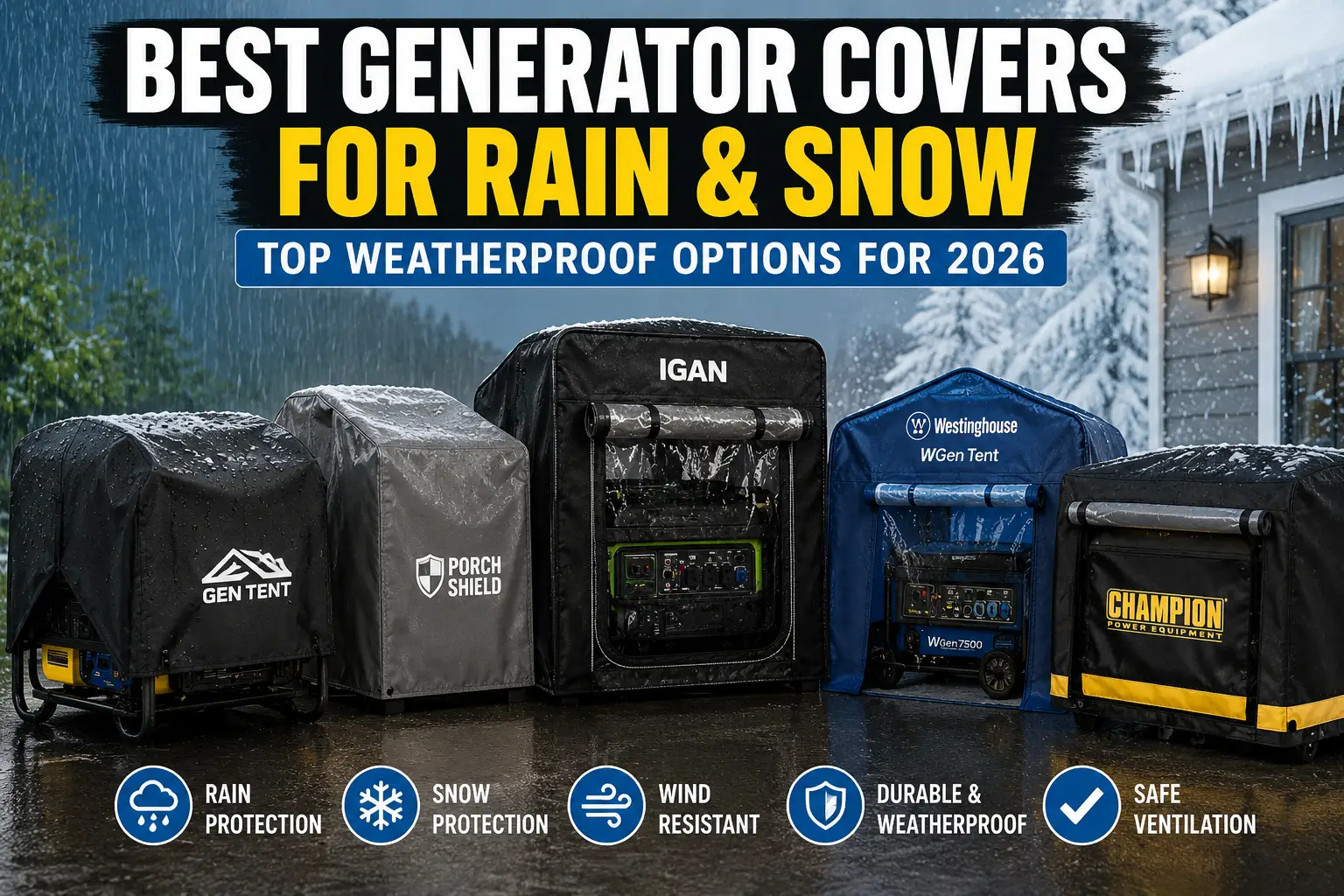
GenTent Generator Running Cover Kit
Best Overall Generator Running Cover
The GenTent is the best overall generator running cover because it provides excellent rain and snow protection while allowing safe generator operation during storms.
The tent-style design keeps water off critical components while allowing airflow around the engine and exhaust. It fits most portable generators between 3000 and 10000 watts, making it one of the most versatile options available.
The clear side panels are especially useful during storms because you can monitor controls and fuel levels without opening the cover.
Pros:
- Safe for generator operation during rain and snow
- Universal fit works with many generator brands
- Excellent ventilation design
- Durable frame handles wind well
Cons:
- Bulkier to store when not in usegenerator is running or in storage.
- More expensive than basic storage covers
- Setup takes longer than slip-on covers
Porch Shield Waterproof Generator Cover
Best Budget Generator Cover
This is the best budget generator cover for protecting generators during storage, light rain, snow, and long-term outdoor exposure.
The heavy-duty 600D polyester material provides solid protection from rain, snow, dust, and UV damage. It fits generators between 5000 and 10000 watts and includes adjustable straps to prevent wind from blowing the cover away.
While this cover works great for storage, it is not designed for operating a generator during storms.
Pros:
- Affordable price
- Thick weather-resistant fabric
- Adjustable straps improve wind protection
- Good sizing options
Cons:
- Storage-only cover
- Velcro closures wear faster than zippers
- Limited ventilation during long-term storage
IGAN Generator Tent Running Cover
Best Heavy-Duty Weatherproof Cover
The IGAN tent is one of the best heavy-duty generator shelters for extreme weather conditions.
Its reinforced frame and thick waterproof materials are designed for severe weather, including strong wind, heavy rain, and snow accumulation. The larger interior space also makes refueling and maintenance easier than tighter-fitting covers.
This is an excellent option for larger home backup generators.
Pros:
- Extremely durable weatherproof design
- Large interior accommodates bigger generators
- Reinforced frame improves snow resistance
- Good airflow for running generators
Cons:
- Higher price point
- Heavier and bulkier than basic covers
- Initial setup takes longer
Westinghouse WGen Tent Cover
Best Generator Tent for Running in Rain
The Westinghouse WGen Tent Cover is specifically designed for operating generators safely in wet conditions.
Its vented roof design allows heat and exhaust to escape while protecting the generator from rain and snow. The setup process is quick, and the custom fit works especially well with compatible Westinghouse generators.
The side access panel also makes refueling easier during extended outages.
Pros:
- Excellent wet-weather operation design
- Good ventilation system
- Easy setup process
- Convenient refueling access
Cons:
- Best suited for Westinghouse generators
- Lighter materials than premium heavy-duty tents
- Limited compatibility with oversized generators
Champion Storm Shield Cover
Best Large Generator Cover for Whole Home Backup
The Champion Storm Shield Cover is one of the best options for protecting larger portable generators during extended outages and severe weather.
This running cover is designed to handle extended outages and severe weather conditions while maintaining proper airflow. The reinforced frame keeps the cover stable during wind and snow, and the large design works well for generators between 4000 and 12500 watts.
The built-in access panels also make refueling and cable management much easier.
Pros:
- Designed for operating generators during storms
- Handles wind and snow well
- Large size fits powerful backup generators
- Convenient access panels
Cons:
- Takes up more storage space
- Vinyl material becomes stiffer in freezing temperatures
- More expensive than storage-only covers
Generator Running Covers vs Storage Covers
Understanding the difference between running covers and storage covers is critical.
Running Covers
Running covers are designed to protect generators while they are operating.
These covers include:
- Ventilation systems
- Open airflow sections
- Heat-resistant materials
- Exhaust clearance
They allow safe operation during rain and snow.
Storage Covers
Storage covers are only designed to protect generators while they are turned off.
These covers focus on:
- Water resistance
- UV protection
- Dust prevention
- Long-term outdoor storage
Never run a generator with a storage cover installed.
What to Look for in a Generator Cover
Waterproof vs Water Resistant
Waterproof covers provide better protection during severe weather.
Water-resistant covers can handle light rain but may leak during heavy storms or prolonged exposure.
For outdoor generator storage, waterproof protection is strongly recommended.
Ventilation and Airflow
Proper airflow is essential if you plan to operate your generator during storms.
Running covers should allow:
- Engine cooling
- Exhaust ventilation
- Safe carbon monoxide dispersal
Poor ventilation can cause overheating and dangerous fume buildup.
UV Protection
Sun exposure slowly damages both generators and covers.
UV-resistant materials prevent cracking, fading, and premature deterioration.
Wind and Snow Resistance
Heavy snow and strong winds can collapse weak covers.
Look for:
- Reinforced frames
- Secure straps
- Heavy-duty seams
- Durable materials
Proper Sizing
A loose cover can collect water and catch wind.
A tight cover may restrict airflow and strain seams.
Always measure your generator carefully before buying.
How to Measure Your Generator for a Cover
Measure:
- Length
- Width
- Height
Include handles and wheels when measuring.
Then compare your measurements to the manufacturer’s sizing chart.
Adding 2–3 inches of clearance usually provides the best fit.
Proper sizing helps:
- Prevent water intrusion
- Improve airflow
- Reduce wind movement
- Extend cover lifespan
Common Mistakes to Avoid
Using Standard Tarps
Regular tarps trap heat and block ventilation.
They are not safe for running generators.
Blocking Airflow
Generators require constant airflow for cooling and exhaust ventilation.
Blocking vents can lead to overheating or dangerous carbon monoxide buildup.
Buying Cheap Thin Covers
Low-quality covers often tear, leak, and fail after one season.
Heavy-duty materials are worth the investment.
Ignoring Wind Protection
Without straps or reinforced frames, covers can blow off during storms.
Secure mounting systems are important in severe weather areas.
Final Verdict: Which Generator Cover Should You Buy?
Best Overall
GenTent Generator Running Cover Kit
Best combination of weather protection, ventilation, and universal compatibility.
Best Budget Option
Porch Shield Waterproof Generator Cover
Affordable protection for storage and light weather exposure.
Best Heavy-Duty Option
IGAN Generator Tent Running Cover
Excellent choice for severe weather and larger home backup generators.
Best for Whole Home Backup
Ideal for larger generators used during long outages, winter storms, and whole-home backup situations.
Frequently Asked Questions
Can you run a generator in the rain?
Yes, but only with a properly ventilated generator running cover or generator tent designed for wet-weather operation.
Never run a generator fully exposed to rain.
Are generator covers safe?
Storage covers are safe only when the generator is off.
Running covers are safe during operation when they are specifically designed to maintain airflow and exhaust ventilation.
What’s the difference between generator tents and storage covers?
Generator tents are designed for operation during rain and snow.
Storage covers are designed only for protection when the generator is not running.
Do generator covers prevent rust?
Yes. Quality covers help prevent water exposure, condensation, UV damage, and corrosion.
This helps extend generator lifespan.
Can snow damage a generator?
Yes.
Snow and ice can damage electrical components, block airflow, and create moisture-related corrosion.
Proper weather protection is especially important in winter climates.