Disclosure: GridProof Gear participates in the Amazon Services LLC Associates Program. As an Amazon Associate, we earn from qualifying purchases.
Portable generators deliver reliable electricity when you need it most. Whether you’re camping in a remote location, tailgating, or facing a power outage at home, a good generator keeps your essential devices running. These machines give you independence from the grid and peace of mind during emergencies.
Compact inverter generators have become the top choice for portable power because they run quietly, weigh less than traditional generators, and use fuel more efficiently. Unlike older models that are loud and heavy, inverter generators produce clean electricity that’s safe for sensitive electronics like phones and laptops. They adjust engine speed based on power demand, saving fuel and reducing noise.
When choosing a generator, consider the wattage output, fuel type, runtime, and noise level. Wattage determines which appliances you can run at the same time. Weight matters if you need to move the generator often. Fuel efficiency affects how long you can operate between refills.
We researched and compared six popular portable generators including the Honda EU2200i, Champion 2500-Watt Portable Inverter Generator, Westinghouse iGen2200, WEN 56203i, Champion 4500-Watt Dual Fuel Inverter Generator, and Jackery Explorer 2000 Plus to help you find the right one for your needs.
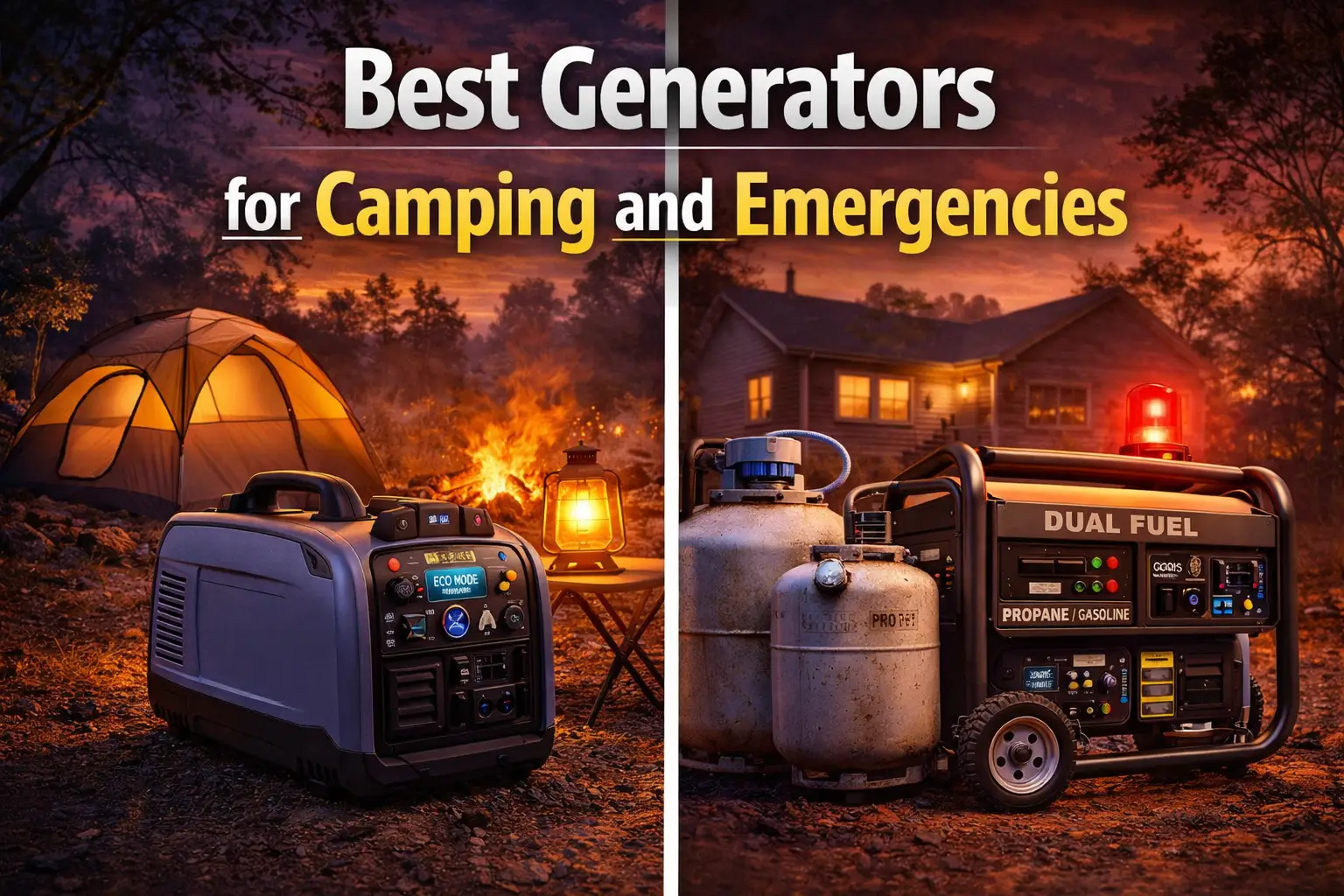
Best Generators for Camping and Emergencies
Here are the best generators for camping and emergencies. These models keep your devices and appliances running when you’re off the grid or during a power outage.
Honda EU2200i Portable Inverter Generator
The Honda EU2200i is a reliable inverter generator that delivers clean power for your sensitive electronics. Honda is known for quality and long-lasting performance.
Key Specifications:
- Running Watts: 1,800W
- Starting Watts: 2,200W
- Fuel Type: Gasoline
- Runtime: 8.1 hours at 25% load
- Weight: 47 pounds
- Noise Level: 48-57 dBA
Pros:
- Very quiet operation
- Fuel efficient
- Excellent build quality
- Clean power safe for electronics
Cons:
- Higher price point
- Smaller fuel tank than some competitors
This generator powers camping essentials like lights, a small coffee maker, phone chargers, and laptops. It also handles a small refrigerator or a CPAP machine. During emergencies, you can run a few lights, charge devices, and power a television or internet router.
Champion 2500-Watt Portable Inverter Generator
The Champion 2500-Watt inverter generator offers good value and solid performance for camping trips and emergency backup. It features a wireless remote start option.
Key Specifications:
- Running Watts: 2,000W
- Starting Watts: 2,500W
- Fuel Type: Gasoline
- Runtime: 11.5 hours at 25% load
- Weight: 83 pounds
- Noise Level: 53 dBA
Pros:
- Long runtime
- Wireless remote start available
- Good power output for the price
- Multiple outlet options
Cons:
- Heavier than similar models
- Louder than premium competitors
You can power a small air conditioner, multiple lights, a laptop, and phone chargers at your campsite. It runs a refrigerator, microwave, or several fans during a power outage. It also supports CPAP machines and medical devices with clean power output.
Westinghouse iGen2200 Portable Inverter Generator
The Westinghouse iGen2200 is a compact and affordable inverter generator that balances performance and portability. It’s a solid choice for casual campers and basic emergency needs.
Key Specifications:
- Running Watts: 1,800W
- Starting Watts: 2,200W
- Fuel Type: Gasoline
- Runtime: 12 hours at 25% load
- Weight: 46 pounds
- Noise Level: 52 dBA
Pros:
- Lightweight and portable
- Long runtime on a single tank
- Affordable price
- Quiet operation
Cons:
- Basic control panel
- Fewer outlets than some models
This generator powers your camping gear including LED lights, a portable fridge, laptops, and phone chargers. You can run a television, internet router, and several lamps during an outage. It also keeps your CPAP machine running or powers small kitchen appliances.
WEN 56203i Super Quiet Inverter Generator
The WEN 56203i delivers reliable power at a budget-friendly price. It operates quietly and produces clean electricity for your electronics.
Key Specifications:
- Running Watts: 1,700W
- Starting Watts: 2,000W
- Fuel Type: Gasoline
- Runtime: 10.8 hours at 25% load
- Weight: 48 pounds
- Noise Level: 51 dBA
Pros:
- Very affordable
- Quiet operation
- Lightweight design
- Good warranty coverage
Cons:
- Lower power output
- Basic features
You can run camping essentials like a portable cooler, lights, a hot plate, and electronics. It supports a sump pump, refrigerator, or furnace fan during emergencies. Your laptop, phone, tablet, and CPAP machine will all work safely with this generator.
Champion 4500-Watt Dual Fuel Inverter Generator
The Champion 4500-Watt dual fuel generator runs on either gasoline or propane, offering flexibility. It provides more power than smaller models and still includes inverter technology benefits.
Key Specifications:
- Running Watts: 3,500W (gasoline), 3,150W (propane)
- Starting Watts: 4,500W (gasoline), 4,050W (propane)
- Fuel Type: Gasoline or Propane
- Runtime: 14 hours at 25% load (gasoline)
- Weight: 141 pounds
- Noise Level: 61 dBA
Pros:
- Dual fuel capability
- High power output
- Long runtime
- Wireless remote start
Cons:
- Heavy and less portable
- Louder than smaller inverters
This generator can power your entire campsite, including an RV air conditioner, microwave, coffee maker, and electronics. During emergencies, you can run your refrigerator, freezer, lights, television, and internet equipment at the same time. It also handles power tools, well pumps, and larger appliances that smaller generators cannot support.
Jackery Explorer 2000 Plus Portable Power Station
The Jackery Explorer 2000 Plus is a battery-powered generator that requires no fuel or engine maintenance. It operates silently and recharges with solar panels or a wall outlet.
Key Specifications:
- Running Watts: 3,000W continuous
- Starting Watts: 6,000W surge
- Fuel Type: Battery (rechargeable)
- Runtime: Varies by load (2,042Wh capacity)
- Weight: 60 pounds
- Noise Level: 0 dBA (silent)
Pros:
- Completely silent operation
- No emissions or fumes
- Solar charging compatible
- Easy to use with no maintenance
Cons:
- Expensive upfront cost
- Limited runtime under heavy loads
You can power your camping electronics, lights, and a portable fridge with this generator. It supports small appliances and charges devices during emergencies, all without noise or fumes.
WEN DF480iX Dual Fuel Inverter Generator
This dual-fuel generator offers flexibility and peace of mind for camping off-grid or handling emergency power outages at home.
Pros
- Runs on both gasoline and propane, so you can choose whichever fuel is available
- Quiet operation at 62 decibels, about as loud as a normal conversation
- Carbon monoxide sensor automatically shuts down the generator if CO levels become dangerous
Cons
- Weighs nearly 80 pounds, making it harder to move without the wheels
- Takes up more storage space than smaller camping generators
- Electric start requires the battery to remain charged between uses
The dual fuel option is more useful than expected. Use gasoline for maximum power or switch to a propane tank for longer runtime without refueling. The propane hookup connects in seconds without tools.
This unit runs quietly during use. At half load, you can talk nearby without raising your voice. The 4000 running watts powered my camping setup, including a small RV air conditioner, coffee maker, and phone chargers simultaneously.
The fuel shutoff feature helps avoid stale gas in the carburetor. When activated, the generator uses the remaining fuel before shutting down, preventing buildup that often requires carburetor cleaning after storage.
The control panel offers four regular outlets, an RV outlet, USB ports, and a 12V car-style outlet. I plugged in sensitive electronics like my laptop without issues, thanks to the clean power from the inverter. The telescoping handle and wheels help move it, though you’ll still want help loading it into a vehicle.
Expect about seven hours of runtime on gasoline at half load, or connect a 20-pound propane tank for longer operation. Eco-mode adjusts engine speed based on your power needs, saving fuel during lighter use.
WEN 6800-Watt Dual Fuel Inverter Generator
This generator provides strong power and fuel flexibility for camping trips and emergency backup. It’s a good choice if you need to run multiple appliances or charge an electric vehicle.
Pros
- Runs on both gasoline and propane, giving you options when one fuel runs out
- Carbon monoxide sensor automatically shuts down the unit if dangerous levels are detected
- Electric start button makes starting easy compared to pull-cord models
Cons
- Weighs close to 100 pounds, making it harder to move than lighter models
- Takes up space with its 22-inch length
- Battery removal can be challenging
The dual fuel capability changed my view on backup power. With a 2.9-gallon gas tank, you get up to 6.1 hours of runtime at half load. Switching to a 20-pound propane tank extends runtime to 9 hours, which helps during long outages.
I tested this generator on a camping trip and barely heard it running from inside my tent. At 64 decibels during light use, it’s quieter than many conversations. The clean power output protected my laptop and phone.
The built-in wheels and telescoping handle make moving it easier. Setting up the propane connection required no tools—just a quick snap-on fitting. Eco-mode automatically adjusts fuel use based on what you plug in, saving gas over several days.
You get eight outlets, including USB ports, RV connections, and a Level 2 electric vehicle charging outlet. The fuel shutoff feature runs the carburetor dry before shutdown, preventing buildup that damages generators during storage. This unit powered tools, a small fridge, lights, and phone chargers all at once without issue.
WEN 56235i Super Quiet Generator
The WEN 56235i delivers reliable power at a great price for campers and homeowners who need backup electricity on a budget.
Pros
- Weighs only 39 pounds, making it easy to carry and store
- Runs at 51 decibels, so you won’t disturb neighbors or fellow campers
- Fuel shutoff feature helps prevent carburetor problems and extends generator life
Cons
- The one-gallon tank means more frequent refueling during extended outages
- Some users report it’s slightly louder than advertised at higher loads
- Build quality feels less solid than premium brands, but it gets the job done
I tested this generator during a camping trip, and its light weight made it easy to load into my truck. You can carry it with one hand. It started on the first pull after a month in storage.
The quiet operation stood out at the campsite. You can have a normal conversation right next to it. I plugged in a small refrigerator, charged my phone, and ran LED lights without issues. The power stayed steady and didn’t cause problems with my electronics.
Running time was better than expected. The small tank provided about six hours at half load before needing a refill. That’s enough for most situations without constant monitoring. The eco-mode switch helps stretch fuel further when running only a few small items.
The fuel shutoff button is a great feature. Flip it before storing the unit, and it burns through leftover gas in the carburetor. This prevents buildup that ruins small engines. After several months of regular use, it still starts on the first or second pull.
You get plenty of outlets for the price: two standard household plugs, a 12V car-style outlet, and two USB ports. I ran my laptop and phone while also powering a small fan during a power outage. Everything worked perfectly with clean power and no flickering.
The 2350 surge watts and 1900 running watts handle most camping and emergency needs. You can run a small refrigerator, some lights, and charge devices at the same time. It won’t power your whole house or a large air conditioner, but it’s not designed for that.
Oxseryn 4400-Watt Generator
This gas-powered generator provides solid power output at a budget-friendly price, making it a practical choice if you need reliable backup power without overspending.
Pros
- Starts quickly, usually on the first or second pull
- Runs quietly for its power range
- Multiple outlet options, including a 30A RV port for flexible power needs
Cons
- You need to purchase oil separately before first use
- Weighs 56 pounds, which can be heavy to carry alone
- May have a slight gas smell when unboxed due to factory testing
This generator stands out for its power output. With 3400 running watts and 4400 peak watts, you can run two refrigerators and a freezer during a power outage. The multiple charging options are helpful, including two standard 120V outlets and an RV-ready 30A port.
Starting is straightforward. It fired up on the third pull after adding oil and fresh fuel. Cold start technology helps in cooler weather for camping trips.
ECO mode saves fuel by adjusting engine speed based on your power needs. During testing, it ran for 14 hours at quarter load on just two gallons of gas, meaning fewer refills during overnight use or long outages.
Inverter technology keeps power clean and stable. You can safely plug in sensitive electronics like laptops and phone chargers. Overload protection and low oil shutdown add extra safety.
At 56 pounds, you can move it around your campsite or garage. The open frame design makes maintenance easy, letting you check oil levels and access the engine quickly. Remember to run it for an hour during break-in and change the oil afterward for best performance.
ERAYAK 2400W Portable Inverter Generator
This generator delivers reliable power output and quiet operation at a reasonable price, making it a great choice for camping and emergency backup.
Pros
- Operates at just 52.5 decibels, so you won’t disturb campground neighbors
- Weighs only 42 pounds, making it easy to carry
- Produces clean power safe for laptops, phones, and medical devices
Cons
- Smaller fuel tank requires more frequent refills during extended use
- Some units may need several pull attempts to start
- Customer support response times can be slow
I used this generator on a weekend camping trip and was impressed by its quiet performance. Inside the tent, you can barely hear it, which is a big advantage over louder models. The 1800 running watts powered my small refrigerator, LED lights, and phone chargers easily.
The compact size makes packing simple. It fits in a truck bed or storage compartment without taking up much space. At 42 pounds, one person can lift it without trouble.
It offers about 16 hours of runtime at a quarter load in eco mode, which covers most camping needs. However, the 0.95-gallon tank means you’ll need to refuel every few hours when running larger appliances.
The power panel includes two AC outlets, two USB ports, and a DC outlet. Inverter technology keeps the power steady and safe for sensitive electronics.
Starting it was straightforward after adding oil and gas. Eco mode automatically adjusts engine speed based on your power needs, saving fuel and reducing noise. The three-year warranty adds peace of mind, though support may take longer than expected.
WEN 3600-Watt Inverter Generator
This generator provides strong power output and quiet operation at a reasonable price, making it a smart option for RV camping and home backup.
Pros
- Runs quietly at 65 decibels, so you won’t disturb others during use
- Weighs only 46 pounds, making it easy to move and transport
- Fuel shutoff feature prevents carburetor problems and extends generator life
Cons
- The 1.6-gallon tank requires more frequent refueling during long use
- Air conditioners hesitate briefly when starting, but the generator recovers quickly
- Recoil start only—no push-button start
The WEN 3600-Watt Inverter Generator impressed me with its power in a lightweight design. You get 2900 running watts and 3600 surge watts without heavy lifting. The clean power output keeps phones, laptops, and other electronics safe.
The noise level is much lower than traditional generators. At 65 decibels, it’s about as loud as a normal conversation. Your camping neighbors and family will appreciate the quiet operation during outages.
The control panel offers two standard outlets, an RV receptacle, a 12V port, and two USB charging ports. Eco mode adjusts engine speed to match your power needs, helping extend fuel use and reducing refueling trips.
The fuel shutoff switch is a valuable feature. After use, it lets the generator burn off remaining fuel in the carburetor before shutting down, preventing most generator issues caused by stale fuel.
This unit powers refrigerators, lights, fans, and charging devices reliably. Running an RV air conditioner pushes it to its limits, causing a brief hesitation, but it recovers quickly and keeps everything running smoothly.
Buying Guide
Power Output
Calculate your power requirements before buying a generator. Add up the wattage of all devices you want to run at the same time.
Running watts show continuous power output. Starting watts indicate the extra power needed when motors and compressors start. Your generator must handle both.
Fuel Type
Generators use different fuel sources, each with its own pros and cons.
| Fuel Type | Benefits | Drawbacks |
|---|---|---|
| Gasoline | Easy to find, affordable | Short shelf life, requires stabilizer |
| Propane | Long storage life, clean burning | Lower power output, tanks needed |
| Dual Fuel | Flexibility, backup options | More expensive, heavier |
| Battery | No emissions, quiet, indoor safe | Limited runtime, recharge time |
Portability
Weight is important when moving your generator. Camping trips benefit from lighter models that you can lift into your vehicle.
Handles and wheels make transport easier. Check dimensions to ensure it fits your storage space.
Noise Level
Quiet generators range from 50-60 decibels, similar to normal conversation.
Many camping sites have noise restrictions. Inverter generators run quieter than conventional models, and your neighbors will appreciate a quieter unit during outages.
Runtime
Runtime tells you how long a generator runs on one tank at 25% load. Longer runtime means fewer refueling stops.
Fuel tank size affects refueling frequency. Larger tanks allow longer operation but add weight.
Special Features
Look for electric start for easy use. Inverter technology produces clean power safe for electronics. Multiple outlets provide charging flexibility.
Frequently Asked Questions
Choosing the right generator means understanding power needs, fuel types, and noise levels for different uses. Battery-powered models offer clean indoor operation, while gas generators deliver longer runtime for extended outages.
What features should I look for in a portable generator for both camping and emergencies?
Choose running watts between 1,800 and 4,500 to handle camping gear and essential home appliances. Look for inverter technology that produces clean power safe for electronics like phones, laptops, and medical devices.
Weight is important when moving the generator. Models under 50 pounds are easier to transport, while heavier units above 100 pounds usually need wheels.
Fuel efficiency affects how long you can run on a single tank. Good generators run 8-12 hours on a gallon of gas at quarter load. Dual-fuel capability gives you flexibility during emergencies when one fuel type might be unavailable.
How do I choose the best generator for home backup power during outages?
Add up the running watts of essential appliances you want to operate at the same time. A refrigerator needs 600-800 watts, a sump pump requires 1,300-2,150 watts, and lights use 60-75 watts each.
Starting watts matter because motors in refrigerators and pumps need extra power to start. Your generator should provide 1.5 to 2 times the running watts to handle these surges.
Runtime at half load tells you how long the generator works before refueling. Look for models that run 8 hours or more to get through a night without refilling.
Transfer switches let you safely connect a generator to your home’s electrical panel. You can also use heavy-duty outdoor extension cords to power individual appliances directly.
What are the advantages of using a battery-powered generator for home emergencies?
Battery-powered generators produce zero emissions, so you can use them indoors without ventilation concerns. You can operate them in your garage, basement, or living room during bad weather.
They run silently compared to gas generators, letting you power devices at night without disturbing your family or neighbors.
Battery models need almost no maintenance since they have no engine, oil, or spark plugs. You just recharge them from a wall outlet or solar panels between uses.
The main limitation is capacity and runtime. Most battery generators provide 1,000-3,000 watt-hours, powering a refrigerator for 10-40 hours or a laptop for much longer before needing a recharge.
How can I compare the noise levels of different generators suitable for camping?
Manufacturers measure generator noise in decibels (dB) at 23 feet. Quiet inverter generators produce 48-58 dB, similar to normal conversation or background music.
Standard portable generators create 65-75 dB, about as loud as a vacuum cleaner or busy traffic. Many campgrounds set noise limits at 60 dB, so inverter models are better for these settings.
Check manufacturer noise ratings at quarter load, since you rarely run generators at full capacity. Noise increases as you add more devices and draw more power.
Economy mode reduces noise by adjusting engine speed based on power demand, making generators quieter during light loads like charging phones or running a small fan.
What is the fuel efficiency of portable generators while using them for camping purposes?
Small inverter generators use 0.08-0.15 gallons of fuel per hour at quarter load. With a one-gallon tank, you can run lights, a phone charger, and a small fan for 8-12 hours.
At half load, fuel use rises to 0.15-0.25 gallons per hour. A gallon of fuel will power a portable refrigerator, camping stove blower, and charging devices for 4-8 hours.
At full load, generators use 0.3-0.5 gallons per hour, providing 2-4 hours of runtime per gallon.
Inverter generators with economy mode adjust engine speed based on your power needs. This feature can extend runtime by 20-40% compared to running at a constant speed.
Are there any portable generators that are particularly well-suited for both cold weather camping and emergency home use?
Dual-fuel generators that use both gasoline and propane perform well in cold conditions. Propane stores indefinitely and works better than gasoline in freezing temperatures.
Choose generators with electric start systems instead of pull-cord recoil starters. Electric start systems work reliably in freezing conditions, while pull-starting becomes difficult in the cold.
Generators with 3,500 to 4,500 running watts can power both camping equipment and essential home appliances during outages. This range supports RV air conditioners for camping and runs refrigerators and heating system components at home.
Oil sensors and low-temperature operation ratings help the generator run safely below freezing. Some models operate at temperatures as low as -10°F without special preparation.