Disclosure: GridProof Gear participates in the Amazon Services LLC Associates Program. As an Amazon Associate, we earn from qualifying purchases.
A generator inlet box lets you connect a portable generator to your home’s electrical system safely and conveniently. Instead of running extension cords through windows or doors, the inlet box mounts on your exterior wall and connects directly to your transfer switch or electrical panel. This setup keeps the connection weatherproof and reduces the risk of carbon monoxide entering your home.
The most important factors when choosing a generator inlet box are the amperage rating, weatherproof enclosure type, and compatibility with your generator’s power cord. You need to match the box’s amp rating to your generator and transfer switch, typically 30A or 50A for home use. The enclosure should meet NEMA standards for outdoor protection against rain, snow, and debris.
Installation requires basic electrical knowledge or a licensed electrician to ensure the connection meets local codes. We researched and compared generator inlet boxes to help you find options that combine durability, proper ratings, and ease of installation.
Best Generator Inlet Boxes
Below is our full list of the best generator inlet boxes. These products will help you safely connect your portable generator to your home’s electrical system during power outages.
Reliance Controls PB30 30-Amp Power Inlet Box
This durable inlet box offers a straightforward installation process and solid weather protection for generators up to 7,500 watts.
Pros
- Weather-resistant design keeps moisture and debris out of electrical connections
- Multiple knockout options give you flexibility for different wiring setups
- Powder-coated steel construction holds up well against rust and corrosion
Cons
- Wiring space can feel tight when working with thicker gauge cables
- Spring-loaded cover snaps shut quickly and needs careful handling
- Limited to 30-amp capacity which may not suit larger generators
The Reliance Controls PB30 stands out for its practical design choices. You get six knockout holes positioned on different sides of the box, which means you can run your wiring from whatever direction works best for your installation. The removable face plate makes the initial setup much easier since you can wire everything before mounting the box to your wall.
This inlet box handles weather conditions without issue thanks to its NEMA 3R rating. The powder-coated steel body resists rust, and the spring-loaded cover protects the outlet when not in use. You won’t need to worry about rain getting into your electrical connections during storage.
The box works with generators producing up to 7,500 running watts through its NEMA L14-30P connection. Push-in wire connections speed up the wiring process compared to traditional screw terminals. The compact size measures 4 inches long by 6 inches wide by 8 inches high, so it doesn’t take up much wall space.
Installation requires basic electrical knowledge and proper safety precautions. The generous interior space accommodates standard wiring, though you might find it snug if you’re working with armored cable or larger wire gauges. The unit weighs just 2 pounds, making it easy to position during installation.
Reliance Controls PB50 50-Amp Power Inlet Box
This inlet box offers solid construction and weather protection for connecting your generator safely to your home’s electrical system.
Pros
- Weather-resistant NEMA 3R rated enclosure keeps moisture out with a spring-loaded inlet cap
- Four knockout options give you flexibility when routing wires through walls
- Made in America with powder-coated steel construction that resists rust and corrosion
Cons
- Interior wiring space feels cramped when working with larger 6-gauge wire
- Terminals are designed for 8-gauge wire but 50-amp setups often require 6-gauge conductors
- You may need pin connectors to properly attach thicker wires to the terminals
The Reliance Controls PB50 gives you a dependable way to connect your generator without running extension cords through windows or doors. This inlet box mounts on your exterior wall and connects directly to your transfer switch or panel inside. The watertight design keeps rain and snow from damaging the electrical connection.
You get four different knockout spots to choose from when running your wire. Pick the side, bottom, or back location that works best for your installation. The removable faceplate makes the initial setup easier since you can access the wiring terminals without fighting against a tight space.
The box handles generators up to 12,500 running watts. It works with the CS6375 plug standard that many mid-size generators use. The powder-coated steel body should hold up well against weather over time.
Some installers report the interior gets tight when using 6-gauge wire. Building codes typically require 6-gauge for 50-amp circuits, but the terminal screws seem better suited for 8-gauge. You might need compression connectors or wire reducers to make the connection secure. The wiring chamber could be bigger given the wire sizes involved.
Installation goes smoothly if you plan ahead. The unit weighs less than two pounds and measures about 6 by 4 by 2.5 inches. Mount it where you can easily reach it with your generator cord but keep it away from exhaust fumes.
Reliance Controls backs this inlet box with a five-year warranty. The company has been making generator accessories since 1909 and holds numerous patents in this field. Customer ratings average 4.7 stars across over 1,800 reviews.
SURAIELEC 50 Amp Generator Inlet Box
This generator inlet box works well for homeowners who need a fully enclosed, weatherproof connection point for backup power.
Pros
- Extra-large interior gives you plenty of room to work with thick gauge wires
- Fully enclosed design keeps water and debris out better than open-face models
- Multiple knockout options let you run wiring from different directions
Cons
- Ground wire connection setup can be confusing during installation
- Lock hole only fits small 6mm shackles, limiting your padlock choices
- Not approved for use in Canada due to missing regulatory certifications
The SURAIELEC inlet box stands out because it offers a completely enclosed design. Many other boxes leave the outlet exposed, but this one wraps everything in a galvanized steel enclosure. The 3R rating means it can handle rain and outdoor conditions without letting moisture inside.
You get six knockout holes positioned on different sides of the box. This flexibility helps when you’re mounting it in tight spots or need to route cables at specific angles. The front panel detaches, which makes the initial wire installation less cramped than boxes where you have to work through a small opening.
The box handles 50 amp service and works with standard NEMA SS2-50 generator cords. It’s ETL certified and rated for 12,000 watts at 120/240 volts. The terminals accommodate wire sizes from 4 to 6 AWG, so you won’t need to step down your wire gauge.
Some users mention the ground wire connection requires extra attention. The receptacle uses one of its four connections for grounding, which means you need to plan your wiring carefully. If your setup differs from standard configurations, you might need to modify the included LED indicator wiring.
The lock mechanism presents a challenge if you want to secure the box. Standard padlocks won’t fit because the hole only accepts 6mm shackles. You’ll likely need a disc lock or another specialty lock type, which adds to your total cost.
Quick Picks
Best Overall: RVMATE Pre-Drilling 50 Amp – Easy installation with LED indicator and roomy interior
Best 50A Option: RVMATE Pre-Drilling 50 Amp – ETL certified with weatherproof design
Best Budget: RVMATE Pre-Drilling 50 Amp – Professional features at a competitive price point
Comparison Table
| Product | Amperage | Voltage | LED Indicator | Pre-Drilled | Price Range |
|---|---|---|---|---|---|
| RVMATE Pre-Drilling | 50A | 125/250V | Yes | Yes | $$ |
Product Reviews
RVMATE Pre-Drilling 50 Amp Inlet Box
This inlet box offers ETL certification and a helpful LED indicator for safe power connections.
Pros
- Pre-drilled mounting holes eliminate the need for knockout punches or special tools
- Green LED light shows when power is connected, which helps during nighttime use
- Interior space is 50% larger than standard boxes for easier wire routing
Cons
- Plug cover wraps around the back, so you need to offset the box slightly from the wall
- Steel construction adds weight at 2.68 pounds
- Single outlet limits connection options
Best for: Homeowners who want a straightforward installation without hiring an electrician.
The RVMATE inlet box handles 50 amps at 125/250 volts, giving you up to 12,500 watts of starting power. The pre-drilled design means you can mount it without drilling new holes or using a knockout punch. This saves time and removes the hassle of preparing the box for installation.
The LED indicator on the flip cover lights up green when power flows through the connection. This feature proves useful when you’re working in low light or at night during a power outage. You’ll know right away if your generator is supplying electricity to your home.
Inside, the box provides generous space for wire termination and routing. Users report that the extra room makes working with 8-gauge wire much simpler than cramped alternatives. The removable front panel gives you good access when you’re making connections.
The steel construction with powder-coat finish resists rust and corrosion. The weatherproof flip cover keeps moisture out of the connector when you’re not using the generator. ETL and cETL certification confirm the box meets safety standards for outdoor installation.
You’ll need to mount this box with a small gap between it and your wall. The plug cover design requires this offset for proper clearance. It’s a minor adjustment that takes a few extra minutes during installation.
Buyer’s Guide
Understanding Amperage Ratings
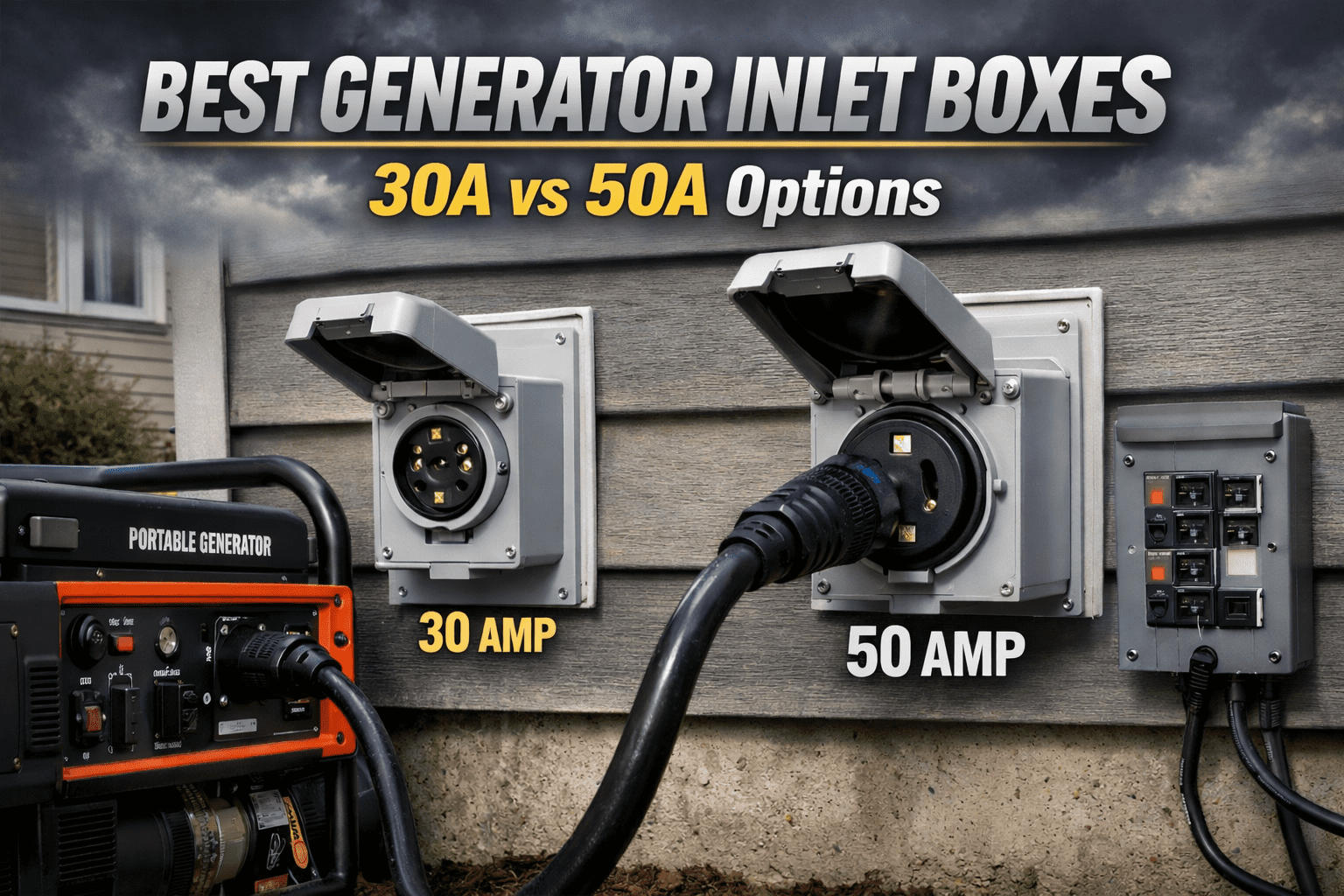
Generator inlet boxes come in 30-amp and 50-amp versions. A 30-amp box handles up to 7,500 watts, while a 50-amp box supports up to 12,500 watts. Your choice depends on your generator’s output and your home’s power needs during an outage.
Most whole-home backup systems use 50-amp connections. Smaller portable generators often work fine with 30-amp boxes. Check your generator’s specifications before buying an inlet box.
Enclosure Ratings Matter
Look for boxes rated for outdoor use with weatherproof covers. Steel construction with anti-corrosive coating lasts longer than plastic options. The enclosure should keep rain, snow, and moisture away from electrical connections.
Pre-drilled boxes save installation time. Standard boxes require knockout punches or drilling, which adds complexity. If you’re doing the work yourself, pre-drilled options make the job easier.
Cord Compatibility
Your inlet box needs to match your generator’s plug type. A NEMA SS2-50P inlet box requires a compatible power cord. Double-check that your generator cord fits the inlet configuration you choose.
Some boxes include LED indicators that show when power is flowing. This feature helps you confirm connections without testing equipment.
Safety and NEC Compliance
Install your inlet box in an open outdoor area away from windows and doors. Generators produce carbon monoxide, so placement matters for safety. Never run a generator in enclosed spaces.
Work with your local building codes and consider hiring a licensed electrician for the installation. You’ll also need a transfer switch or interlock kit to prevent backfeeding power into utility lines. This protects utility workers and your electrical system.
ETL or UL certification shows that the inlet box meets recognized safety standards. Don’t skip this requirement when choosing a product.
FAQ
Do I need an electrician to install a generator inlet box?
Installation requires working with your home’s electrical panel and involves safety considerations. While some homeowners handle this work themselves, hiring a licensed electrician ensures code compliance and safe operation.
What’s the difference between 30-amp and 50-amp inlet boxes?
The amperage rating determines how much power the box can safely handle. A 30-amp box works for smaller generators up to 7,500 watts, while 50-amp boxes support larger units up to 12,500 watts.
Can I install an inlet box on vinyl siding?
You can mount inlet boxes on vinyl siding with proper backing. Install a mounting block or ensure the box attaches to solid framing behind the siding. Leave a small gap for boxes with wraparound covers.
How far should the inlet box be from my electrical panel?
Shorter distances reduce wire costs and voltage drop. Most installations place the inlet box within 10-20 feet of the main panel, but check local codes for specific requirements in your area.
Final Verdict
The RVMATE Pre-Drilling 50 Amp Inlet Box combines ease of installation with safety features that matter during power outages. The pre-drilled design and LED indicator set it apart from basic alternatives. If you need a reliable
Buying Guide
Amperage Rating
You need to match your generator inlet box amperage to your generator’s output. Most home generators use either 30A or 50A ratings. A 30A inlet box works for smaller portable generators up to 7,500 watts. A 50A inlet box handles larger units from 7,500 to 12,500 watts.
Check your generator’s specifications before buying. Using an inlet box with too low an amperage rating creates fire hazards and electrical failures.
Enclosure Rating
The NEMA rating tells you how well the box protects against weather. NEMA 3R ratings resist rain, sleet, and ice formation. They work for most outdoor installations where the box faces downward or has some overhead protection.
NEMA 4X ratings offer better protection. These units resist corrosion from salt spray and can handle direct water spray from any direction.
Cord Compatibility
Your inlet box must match your generator’s plug configuration. L14-30 connectors work with 30A, 125/250V four-prong twist-lock plugs. L14-50 connectors fit 50A, 125/250V four-prong twist-lock plugs.
Some boxes include the power cord while others require separate purchase. Make sure the cord length reaches from your generator location to the inlet box.
Material and Build Quality
Look for boxes made from metal or heavy-duty plastic. Metal boxes last longer but cost more. Good boxes include gaskets that seal out moisture and keep connections dry.
Check that all mounting hardware comes included. The box should have clear interior labeling for wire connections.
Frequently Asked Questions
Generator inlet boxes require proper amperage matching, correct installation height, specific wiring configurations, and compliance with local electrical codes including GFCI requirements and transfer switch integration.
What are the essential features to look for in a generator power inlet box?
You need a weatherproof enclosure rated at least NEMA 3R for outdoor use. The box should have a flip-up cover that protects the inlet when not in use.
Look for a model with the correct plug configuration that matches your generator’s output. Most residential units use L14-30 or L14-50 connectors. The inlet should include a threaded hub or knockout for conduit entry.
Choose a box made from durable materials like aluminum or heavy-duty plastic. Quality units include mounting flanges and hardware for secure installation.
How do I determine the right amperage capacity for my generator inlet box?
Match the inlet box amperage to your generator’s output capacity. A 7,500-watt generator typically requires a 30-amp inlet box, while generators producing 10,000 watts or more need a 50-amp box.
Calculate your generator’s amperage by dividing its wattage by voltage. For example, a 12,000-watt generator at 240 volts produces 50 amps.
Never use an inlet box with lower amperage than your generator provides. This creates fire hazards and code violations.
What are the implications of installing a generator inlet box at a certain height?
Most local codes require inlet boxes mounted between 18 and 24 inches above ground level. This height prevents water accumulation during floods while keeping the connection accessible.
Installing too low risks water damage and electrical hazards. Mounting too high makes connecting heavy generator cords difficult and creates strain on the connection.
You should verify your local building codes before installation. Some jurisdictions have specific height requirements based on flood zones.
Are there specific wiring diagrams to follow when installing a generator inlet box?
You must follow the wiring diagram provided with your specific inlet box model. Standard L14-30 connections use four wires: two hots, one neutral, and one ground.
Connect the two hot wires to separate bus bars in your electrical panel. The neutral wire connects to the neutral bus, and the ground wire attaches to the grounding bus.
Your inlet box connects to a transfer switch, not directly to your main panel. The transfer switch prevents backfeeding electricity into utility lines.
Do local codes dictate the use of GFCI with generator inlet boxes?
GFCI requirements for generator inlet boxes vary by jurisdiction and installation location. Some areas mandate GFCI protection for all outdoor receptacles, including generator inlets.
The 2020 NEC does not specifically require GFCI protection for generator inlet boxes. However, your local amendments may add this requirement.
Check with your local building department before installation. Many electricians recommend GFCI protection regardless of code requirements for added safety.
How does a power inlet box integrate with a generator transfer switch?
The inlet box connects to your transfer switch through hardwired conduit and electrical wire. When you plug your generator into the inlet box, power flows through the conduit to the transfer switch.
The transfer switch isolates your home circuits from the utility grid. You manually or automatically switch selected circuits to receive generator power through the transfer switch.
This system prevents backfeeding, which protects utility workers and your generator. The inlet box serves as the outdoor connection point, while the transfer switch manages power distribution inside your home.