Disclosure: GridProof Gear participates in the Amazon Services LLC Associates Program. As an Amazon Associate, we earn from qualifying purchases.
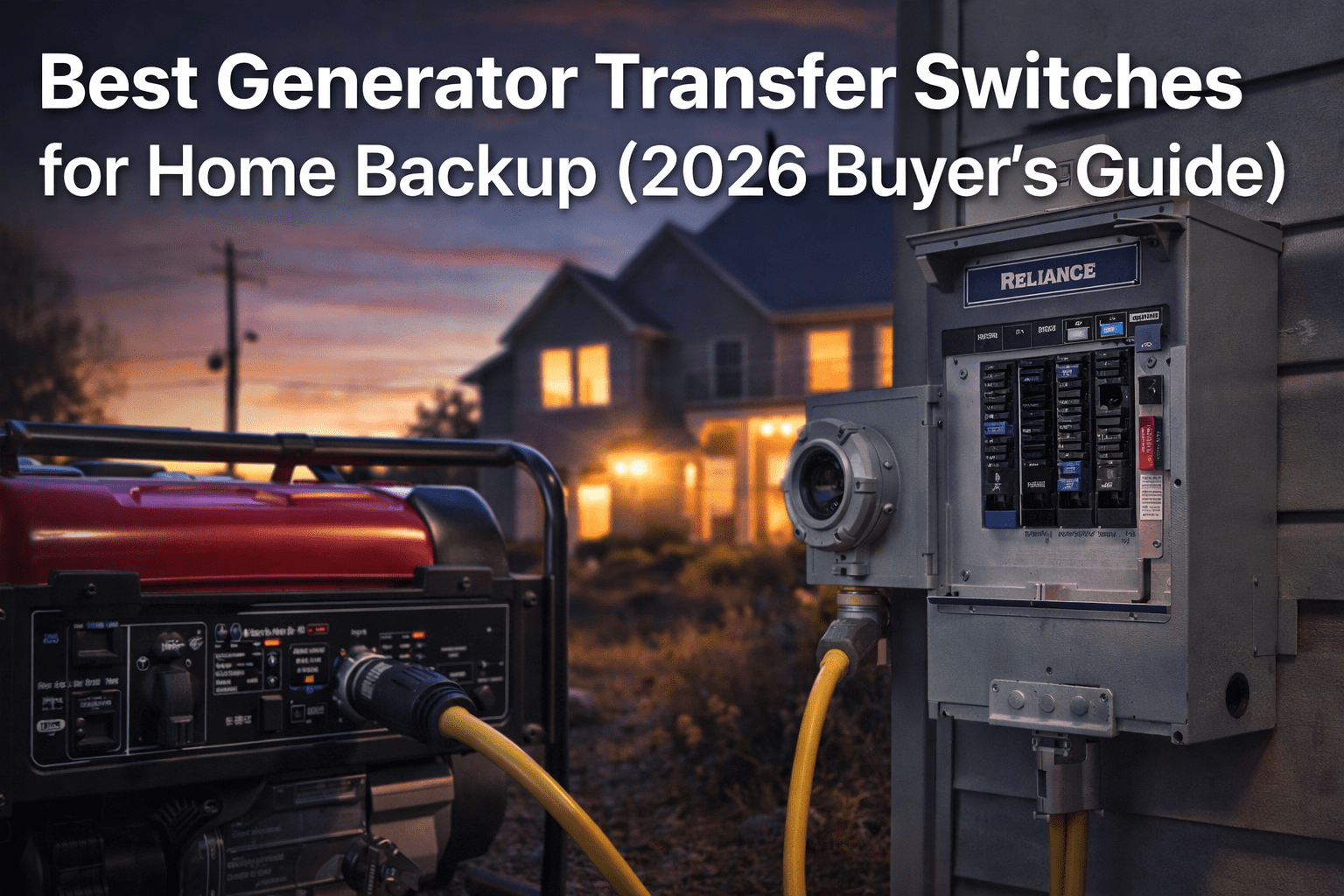
When the power goes out, running a portable generator without a transfer switch puts your home, your family, and utility workers at serious risk. Plugging a generator into a wall outlet—called backfeeding—can send electricity back into power lines and electrocute linemen working to restore service. A transfer switch is the only safe and legal way to connect your generator to your home’s electrical system. It prevents backfeeding, eliminates dangerous extension cords, and ensures your backup power works when you need it most.
Transfer switches are available in manual and automatic models, with different amp ratings to match your generator size and home circuits. Choose your switch based on your generator’s output, the number of circuits you want to power, and your preference for instant or manual switchover. Most homeowners need either a 30-amp switch for smaller portable generators or a 50-amp model for whole-home backup.
This guide reviews the best generator transfer switches for 2026 and shows you exactly which one to buy based on your generator size and outlet type. You’ll find guidance on sizing your switch, key features to consider, and top models that deliver safety, reliability, and value.
Key Takeaways
- Transfer switches prevent deadly backfeeding and keep utility workers safe during power outages.
- Match your transfer switch amp rating to your generator size and home circuit needs.
- Manual switches are cost-effective for most homeowners, while automatic switches provide instant backup power.
Quick Comparison Table: Best Generator Transfer Switches for Home Backup (2026)
| Transfer Switch | Best For | Amperage | Circuits | Type | Safety Certifications |
|---|---|---|---|---|---|
| Reliance Controls 31406CWK | Budget-conscious homeowners | 30A | 6 | Manual | UL Listed, NEC Compliant |
| Generac RXSW200A3 | Whole-home automatic backup | 200A | Service Entrance | Automatic | UL Listed, cUL |
| Connecticut Electric Series 2 | Mid-sized homes needing more circuits | 50A | 10 | Manual | UL Listed, NEC Compliant |
| Siemens ECSBPK06 | Quick installation with basic needs | 30A | 6 | Manual | UL Listed |
| Reliance Controls Pro/Tran 2 | Professional-grade reliability | 50A | 10 | Manual | UL Listed, cUL, NEC Compliant |
Best Overall Pick for Most Homes (30A Portable Generators – L14-30)
The Reliance Controls 31406CWK is the safest, easiest transfer switch for most homeowners running a 30A L14-30 portable generator (typically 5,000–7,500W).
✅ Works with L14-30 generators
✅ UL & NEC compliant
✅ Powers fridge, furnace, lights
This is the safest choice for most homeowners running a 5,000–7,500W portable generator with an L14-30 outlet.
Check current price for Reliance 31406CWK on Amazon
Key Compatibility Notes:
The Reliance Controls 31406CWK supports generators with L14-30 connections, making it compatible with most portable generators in the 5,000-7,500 watt range.
The Generac RXSW200A3 manages whole-home loads and pairs with standby generators rated 15kW or higher. It switches automatically during outages.
Connecticut Electric Series 2 accepts L14-50 plugs for larger portable generators and allows you to manage essential appliances across 10 separate circuits.
Siemens ECSBPK06 offers straightforward wiring for homeowners seeking basic coverage and includes a weatherproof outdoor enclosure.
All listed switches comply with the National Electrical Code and are UL-listed for residential generator installations. Always follow local codes and manufacturer guidelines for safe installation.
Why We Picked the Reliance 31406CWK (Safety, Simplicity, Value)
The Reliance Controls 31406CWK is the top choice for most homeowners. It manages six critical circuits with a 30-amp capacity, covering essential appliances like refrigerators, furnaces, and lights without unnecessary complexity.
Best For: Homeowners seeking straightforward backup power without the expense of whole-home coverage.
Generator Compatibility: Compatible with standard 30-amp portable generators using L14-30 connections. Most mid-sized generators between 5,000 and 7,500 watts fit this specification.
Safety Certifications: UL-listed and meets National Electrical Code requirements for residential installations.
| Feature | Specification |
|---|---|
| Amperage | 30A |
| Circuit Capacity | 6 circuits |
| Voltage | 125/250V |
| Plug Type | L14-30 |
Pros:
- Pre-wired power cord reduces installation errors
- Wattage meter displays real-time power usage
- Compact indoor design fits most utility rooms
- Clear circuit labels for easy operation during outages
Cons:
- Limited to six circuits (not suitable for larger homes)
- Requires professional installation for warranty coverage
- No outdoor mounting option
This transfer switch delivers reliable performance for typical suburban homes. You get enough circuits to keep your family comfortable during outages without unnecessary features. The Reliance 31406CWK review covers its safety mechanisms in detail.
Your generator connects quickly through the included power inlet box. The switch blocks backfeeding into utility lines, protecting both your equipment and utility workers.
Best Budget Transfer Switch for Small Portable Generators (Under 7,500W)
If you use a portable generator under 7,500 watts, you can choose an affordable transfer switch that provides safety without high costs.
Reliance Controls 306LRK Pro/Tran 6-Circuit Transfer Switch is the best option for smaller generators. This kit costs significantly less than whole-home systems and provides UL-listed protection.
Best for: Homeowners who want to power essential circuits like the refrigerator, furnace, and a few lights during outages.
Generator Compatibility:
- Works with 30-amp portable generators
- Uses standard L14-30 plug
- Rated for up to 7,500 watts
Safety Certifications: UL-listed and meets NEC (National Electrical Code) requirements for safe installation.
Pros:
- Simple mechanical design with fewer parts to fail
- Pre-wired power inlet box saves installation time
- Weather-resistant NEMA 3R enclosure for outdoor mounting
- Clear labeling for easy circuit selection
Cons:
- Only powers six circuits (not whole-home coverage)
- Requires manual switching between power sources
- Professional installation recommended for safety
An electrician should install this switch to ensure safety and code compliance, but the upfront cost remains low compared to automatic systems. The manual lever lets you select which circuits run on generator power, preventing overloads.
This transfer switch offers legal, safe backup power at an affordable price.
Best 30-Amp Transfer Switch for Portable Generators (L14-30)
A 30-amp transfer switch is the standard for portable generators in the 5,000 to 7,500-watt range. These units use the L14-30 locking plug, the most common connector for mid-sized generators.
Reliance Controls 30 Amp 6-Circuit Transfer Switch Kit is ideal for homeowners needing a straightforward, budget-friendly solution. This kit supports generators up to 7,500 watts and includes a 10-foot power cord for easy connection.
Generator Compatibility: 30A, L14-30 plug
Safety Certifications: UL listed, NEC compliant
Pros:
- Includes power cord and inlet box
- Easy installation with clear instructions
- Six circuits to power multiple appliances
- Prevents backfeeding to utility lines
Cons:
- Manual operation only
- Limited to six circuits
GenerLink 30-Amp Automatic Transfer Switch is the best choice for those seeking automatic operation. This unit mounts behind your electric meter and supports generators up to 8,500 watts.
Generator Compatibility: 30A, supports up to 200-amp service panels
Safety Certifications: UL certified
Pros:
- Automatic switching during power failures
- Meter-mounted design saves space
- No additional panel required
- Weather-resistant construction
Cons:
- Higher price point
- Requires professional installation
- May require utility approval
Both options provide safe, code-compliant connections for portable generator transfer switch needs. Choose manual for affordability or automatic for convenience.
Best 50-Amp Transfer Switch for Whole-Home & Large Generators
A 50 amp transfer switch powers most of your home’s essential circuits during an outage. These switches pair with generators up to 12,500 watts and use L14-50 connections.
Connecticut Electric CESW503CR
Ideal for homeowners who need to manage 10 circuits with high-demand appliances.
This manual transfer switch supports 50 amps at 240 volts. It connects to generators with L14-50 outlets and features clear circuit labeling for straightforward installation. The unit is UL listed and meets NEC requirements for residential use.
Pros:
- Controls 10 separate circuits
- Includes pre-wired power inlet
- Built-in surge protection
Cons:
- Manual operation only
- Requires professional installation
Best if you want an easy setup with clearly marked wires.
This 50-amp switch manages up to 10 circuits and features color-coded wiring. It is designed for L14-50 generators and holds UL certification. The built-in wattmeter lets you monitor power usage during operation.
Pros:
- Easy-to-follow installation guide
- Includes wattmeter
- Compact design
Cons:
- Manual switching required
- Limited to 50 amps total load
Both options offer reliable whole house transfer switch performance for large generators. Choose based on whether you prefer added features like surge protection or a simpler installation process.
What Is a Generator Transfer Switch (And What Happens If You Don’t Use One)
A generator transfer switch safely connects your backup generator to your home’s electrical system. It switches your power source from the utility grid to your generator during an outage, preventing both sources from running simultaneously and protecting your home and utility workers.
Two main types:
- Manual transfer switches require you to flip the switch when the power goes out
- Automatic transfer switches detect outages and switch power sources on their own within seconds
Without a transfer switch, you risk serious safety hazards. Connecting a generator directly to your electrical panel can cause backfeed, where power flows backward through utility lines and endangers repair workers.
Not using a transfer switch can cause:
- Electrical fires in your home’s wiring
- Damage to appliances and electronics
- Electric shock to you or utility workers
- Violation of local electrical codes
A transfer switch also directs power only to the circuits you select, preventing generator overload and ensuring efficient backup power. Most electrical codes require transfer switches for generator installations, making them both a legal and safety necessity.
A certified electrician should install your transfer switch near your main circuit breaker panel. This ensures safe, reliable backup power when you need it.
Manual vs Automatic Transfer Switches: Which Is Right for Your Home Backup Setup?
Transfer switches come in two types that differ in price and operation. Your choice depends on your budget and convenience needs.
Manual transfer switches require you to flip switches to move power from the grid to your generator. You must be home during an outage. These switches cost less, typically between $300 and $800 for the unit.
Automatic transfer switches detect power outages and switch to generator power without any action from you. They work even when you’re away from home and usually cost between $500 and $2,000 or more.
Here’s how they compare:
| Feature | Manual | Automatic |
|---|---|---|
| Cost | $300-$800 | $500-$2,000+ |
| Installation | Simpler, lower labor costs | Complex, higher labor costs |
| Response Time | You must be present | Immediate (10-30 seconds) |
| Maintenance | Minimal | Requires testing and upkeep |
| Best For | Budget-conscious homeowners who are usually home | Those who travel frequently or need critical power |
Manual switches are reliable and cost-effective if you are home most of the time. They meet UL and NEC safety standards when installed properly.
Automatic switches are better if you travel often, rely on medical equipment, or want hands-free operation. They also start your generator automatically.
Both types support common generator connections like L14-30 (30A) and L14-50 (50A) plugs. Ensure your transfer switch matches your generator’s output rating.
30 Amp vs 50 Amp Transfer Switches Explained
The main difference between 30 amp and 50 amp transfer switches is power capacity. A 30 amp switch supports generators up to 8,000 watts, while a 50 amp switch handles generators between 8,500 and 15,000 watts.
Power Output Comparison
| Switch Rating | Maximum Wattage | Voltage | Typical Use |
|---|---|---|---|
| 30 Amp (L14-30) | Up to 7,000W | 120/240V | Essential circuits (fridge, furnace, lights) |
| 50 Amp (L14-50) | Up to 12,000W | 120/240V | More circuits + larger loads (well pump, some HVAC) |
A 30-amp transfer switch for home backup generators typically uses an L14-30 outlet (4-prong, 120/240V), which allows you to safely power both 120V and 240V household circuits. This setup powers basic appliances like refrigerators, lights, and a few outlets during an outage.
A 50 amp transfer switch features a 14-50R outlet with 4 prongs and runs at 240 volts. This provides up to 12,000 watts, allowing you to operate larger appliances such as air conditioners, electric dryers, or well pumps.
Which One Do You Need?
Your choice depends on your generator’s capacity and your backup power needs. If you only need to run essential circuits, a 30 amp switch is sufficient. For whole-home backup or multiple heavy-duty appliances, choose a 50 amp switch.
The transfer switch must match your generator’s outlet and amperage. Using a 50-amp switch with a 30-amp generator won’t increase power—and can require adapters or wiring changes you don’t want. Always check your generator’s specifications before purchasing a transfer switch.
How to Choose the Right Transfer Switch for Your Generator (Amp Rating, Generator Size, Home Circuits)
Start by checking your generator’s wattage and amperage rating on its nameplate or manual to match it with the correct transfer switch.
Amp Rating Match
Your transfer switch amperage must match or exceed your generator’s output. For example, a 7,500-watt generator running at 240V produces about 31 amps, requiring at least a 30-amp transfer switch. A 12,000-watt generator needs a 50-amp switch.
| Generator Wattage | Minimum Switch Rating |
|---|---|
| Up to 7,500W | 30A |
| 7,500W – 12,000W | 50A |
| 12,000W+ | 60A or higher |
Circuit Selection
Decide which circuits you want to power during an outage. Manual transfer switches usually handle 6-10 circuits, while automatic switches can manage your entire panel. Essential circuits often include your refrigerator, heating system, lights, and medical equipment.
Confirm your home’s voltage—most use 240V service—and ensure your transfer switch is compatible. The switch must also have the correct inlet type for your generator’s plug, such as L14-30 for 30-amp generators.
Safety Standards
Choose a transfer switch with UL or cUL certification. These marks confirm the device meets National Electrical Code requirements. Certified switches protect your home from backfeeding, keeping utility workers and equipment safe.
Consider whether you want manual or automatic operation. Manual switches are less expensive but require you to operate them. Automatic switches activate within seconds of an outage but cost more.
Installation Considerations: DIY vs Hiring an Electrician (Cost, Permits, Safety)
Careful planning is essential before installing a transfer switch. Consider costs, safety, and local regulations.
DIY Installation
Installing a transfer switch yourself can save on labor costs. Electricians typically charge $200 to $800 for installation, depending on complexity. DIY projects only require payment for materials and permits.
However, DIY installation carries significant risks. Working with your home’s main electrical panel and high-voltage circuits can lead to electrical fires, generator damage, or serious injury if done incorrectly.
Hiring a Professional Electrician
A licensed electrician brings expertise and the right tools. They understand local electrical codes and manage the permit process. Professional installation usually costs between $500 and $1,500 in total.
Licensed electricians carry insurance for your protection and ensure installations meet NEC requirements and manufacturer specifications for safety certifications like UL and cUL.
Permits and Code Compliance
Most areas require permits for transfer switch installation. Local building departments inspect the work to verify code compliance. Professional electricians handle permits and inspections as part of their service.
If you install the switch without proper permits, you may face fines, and your homeowner’s insurance may not cover damage from unpermitted electrical work.
Safety First
Transfer switch installation involves 240-volt circuits and your main breaker panel. This work requires respect and expertise. Even experienced DIYers should consider hiring a professional for this task.
Safety, NEC Code Compliance, and Backfeeding Risks You Must Avoid
Backfeeding a generator is illegal and extremely dangerous. Plugging a generator directly into an outlet can send electricity back through power lines, risking electrocution for utility workers restoring power.
The National Electrical Code (NEC) prohibits backfeeding without approved equipment. Use a transfer switch that is NEC compliant and UL listed to meet all safety standards and legal requirements.
Critical risks of improper generator connections:
- Electrocution of utility workers restoring power
- Fire hazards from overloaded circuits
- Damage to your generator and home appliances
- Legal fines and code violations
- Voiding of your homeowner’s insurance
A proper transfer switch acts as a generator safety switch, isolating your home from utility power when using a generator. Manual transfer switches require you to select the power source, while interlock kits prevent both the main breaker and generator breaker from being on at the same time.
Both options prevent generator backfeeding when installed correctly. Choose transfer switches with UL 1008 or UL 508A certification for verified safety. Local electrical codes may require specific certifications, so check with your building department before purchasing.
Never use homemade connections or suicide cords (cables with two male ends). These methods bypass essential safety mechanisms and endanger lives.
Common Mistakes to Avoid When Buying a Transfer Switch (That Cost Homeowners Thousands)
Buying the wrong size transfer switch is a costly mistake. Calculate your actual power needs before purchasing. If your essential circuits require 50A but you buy a 30A switch, you will need to replace the entire unit.
Ignoring generator compatibility leads to expensive reinstallations. Always check these specifications before buying:
- L14-30 vs L14-50 outlets – Ensure your generator and switch match
- Amperage ratings – 30A, 50A, or 100A capacity
- Voltage requirements – 120V or 240V systems
Skipping safety certifications to save money creates serious risks. Always choose transfer switches with UL or cUL listings that meet NEC requirements. Uncertified switches can void your home insurance and fail inspections.
Choosing between manual and automatic switches without understanding the differences can lead to costly repairs. Manual switches are suitable if you are home during outages. If you travel often or rely on medical equipment, invest in automatic switching despite the higher cost.
Installation location is critical. Mount your transfer switch within 10 feet of your breaker box to avoid expensive additional wiring.
Using indoor-rated switches outdoors leads to premature failure. Outdoor installations require weatherproof ratings; otherwise, you may need to replace the switch within a few years instead of the expected 15-20 years.
Plan for future expansion by adding 20-25% capacity beyond your current needs. This approach prevents the need for another switch later.
Final Verdict: The Best Generator Transfer Switches for Safe, Reliable Home Backup Power
Choose a transfer switch based on your home’s power needs and generator setup. The following options cover the most common scenarios for homeowners.
For Most Homeowners: 30A Manual Transfer Switch
This switch is ideal for smaller portable generators and powering essential circuits. It typically supports 6-10 circuits and connects to standard L14-30 generator outlets.
Pros: Affordable, easy to install, compatible with most portable generators
Cons: Requires manual operation, limited circuit capacity
Safety: UL-listed, meets NEC requirements
For Whole-Home Backup: 50A Manual Transfer Switch
A 50A switch handles up to 12,500W and supports larger generators and more circuits.
Pros: Higher capacity, powers most home circuits, durable
Cons: Higher cost, requires professional installation
Safety: UL and cUL certified
For Automatic Operation: Automatic Transfer Switch (ATS)
An ATS detects outages and switches to generator power automatically. It pairs with standby generators rated 30A or 50A.
Pros: No manual effort, instant power restoration, ideal for frequent outages
Cons: Highest cost, requires professional backup generator installation
Safety: UL-listed, built-in safety features
Select a transfer switch that matches your generator’s amperage rating and supports the circuits you need during outages. Always verify UL or cUL certification before purchasing.
Frequently Asked Questions
Transfer switches involve technical specifications, installation requirements, and safety considerations that homeowners should understand before purchasing. The right choice depends on your home’s electrical capacity, generator type, and preference for manual or automatic operation.
What are the key differences between manual and automatic transfer switches for home backup generators?
Manual transfer switches require you to physically switch from utility to generator power. Start your generator, then use the transfer switch to redirect power to selected circuits.
Automatic transfer switches detect outages and switch to generator power without your intervention. They also start your generator automatically.
The main difference is cost versus convenience. Manual switches typically cost $200 to $800. Automatic models range from $500 to $2,000 or more. Manual switches work well with portable generators. Automatic switches are best for standby generators.
Manual switches require you to be home during an outage. Automatic switches protect your home even when you are away, making them ideal for vacation homes or frequent travelers.
How do I determine the appropriate size of a transfer switch for my home’s power needs?
Size your transfer switch based on your total electrical load and the number of circuits you need during an outage. List the essential appliances and systems you want to run.
Add up the wattage for all devices you plan to use at the same time. Include starting wattage for motors in refrigerators, well pumps, and air conditioners, as these can be 2-3 times higher than running wattage.
Match the transfer switch amperage to your needs. A 30-amp switch handles up to 7,500 watts at 240 volts, suitable for 6-8 essential circuits. A 50-amp switch supports up to 12,500 watts and typically powers 10-12 circuits.
For whole-home backup, use a transfer switch rated for your main service panel. Most homes have 100-amp or 200-amp service. Your generator must also match this capacity for full coverage.
What features should I consider when choosing a transfer switch for a portable generator?
Check that the power inlet box matches your generator’s output plug. Most portable generators use L14-30 (30-amp) or L14-50 (50-amp) twist-lock receptacles.
The number of circuits determines how many areas or appliances you can power. Six-circuit switches like the Reliance Controls 31406CWK suit basic needs, while 10-circuit models like the Connecticut Electric Series 2 offer more flexibility.
UL or cUL listing ensures the switch meets safety standards. This certification is essential for passing inspections and maintaining insurance coverage.
Wattmeter displays help you monitor power usage and avoid overloading your generator. This feature, available on higher-end models, prevents equipment damage.
Indoor-rated enclosures cost less but must be mounted in protected areas like garages or basements. Outdoor-rated NEMA 3R enclosures withstand weather and can be installed on exterior walls.
Can I install a 50 amp manual transfer switch for my home generator, and what are the implications?
If your generator produces enough power, you can install a 50-amp manual transfer switch. A 50-amp switch at 240 volts supports up to 12,500 watts of continuous power.
Your generator must have a 50-amp outlet, usually an L14-50 receptacle. If your generator only has a 30-amp outlet, do not use a 50-amp transfer switch, as this creates a fire hazard.
A 50-amp switch typically supports 10-12 circuits, offering more options for powering your home. This setup works well for larger homes or multiple high-wattage appliances.
Hire a licensed electrician for installation. The process involves connecting to your main service panel and may require permits and inspections. Installation costs typically range from $500 to $1,500, depending on your location and panel complexity.
Is it possible to upgrade to a 200 amp transfer switch if my current service is only 100 amps, and what does that entail?
You can install a 200-amp transfer switch on a 100-amp service panel, but it provides no practical benefit. Your main breaker limits the total power, so you cannot exceed 100 amps regardless of the switch size.
The transfer switch rating should match or slightly exceed your main service rating. Oversizing the switch increases costs without adding capacity.
If you plan to upgrade to 200-amp service later, installing a 200-amp transfer switch now can save you from replacing it in the future.
An electrician must upgrade your main service panel, meter base, and utility connection. This project typically costs $2,000 to $4,000 and requires coordination with your utility company. Your generator must also support 200-amp service, meaning a unit producing at least 20,000 watts.
What are the best practices for installing a whole house manual transfer switch to ensure safety and compliance with electrical codes?
Hire a licensed electrician to install your transfer switch. This step ensures code compliance and maintains your home insurance coverage. Most jurisdictions require permits and inspections for this type of electrical work.
The electrician should install the transfer switch between your utility meter and main service panel, or directly to the panel. Proper grounding and bonding prevent electrical shock hazards.
Select the correct wire gauge for your amperage rating. Use 3-gauge copper wire for a 100-amp switch and 2/0 or larger for a 200-amp switch. Using undersized wiring increases fire risk and will not pass inspection.
Mount a power inlet box on your home’s exterior in a weather-protected area. Place it at least 18 inches above ground level to avoid water damage during flooding.
Clearly label all circuits on the transfer switch. Post operating instructions nearby for family members and emergency responders.
After installation, test your system by running the generator and transferring power to each circuit. Ensure utility power and generator power never connect at the same time to avoid equipment damage or electrocution.